
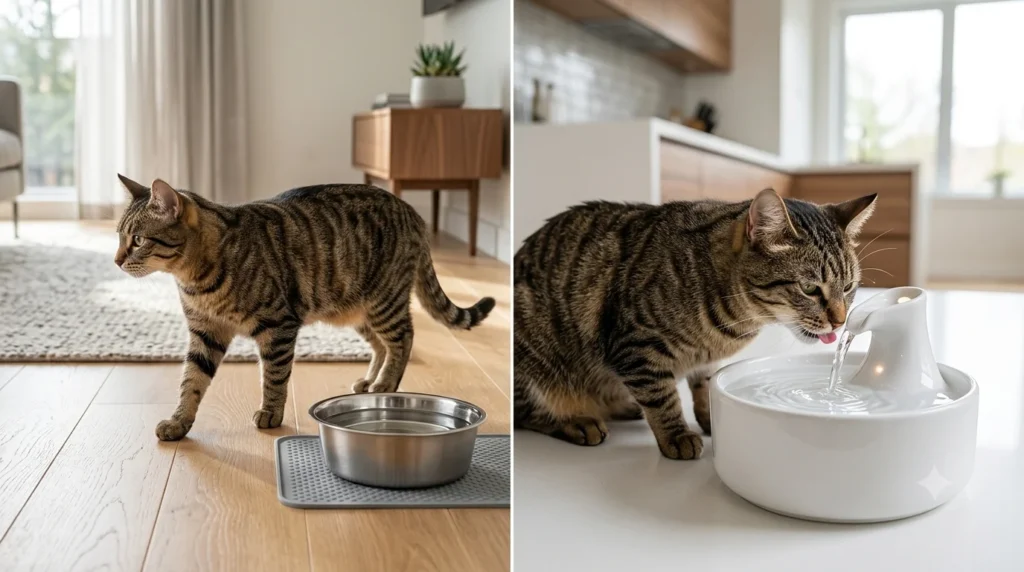
Why Do Cats Prefer Running Water?
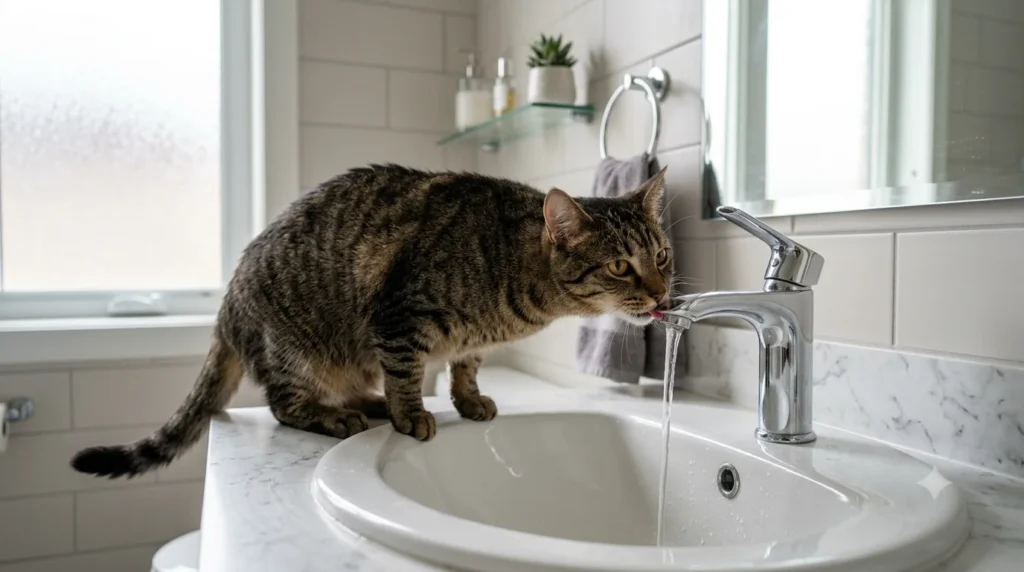
Ever noticed your cat ignoring a full water bowl but rushing over the moment you turn on the tap?
You fill your cat’s water bowl with fresh, clean water. A few hours later, it’s still untouched. Then, as soon as you turn on the kitchen or bathroom tap, your cat appears out of nowhere—eyes fixed on the gentle stream of water, eagerly waiting for a drink. If this sounds familiar, you’re not imagining things. Many cats genuinely prefer running water over still water, and there’s a fascinating reason behind it. The behaviour isn’t simply a quirky habit. It’s deeply connected to your cat’s natural instincts, sensory abilities, and even the way wild cats survived thousands of years ago. In this guide, you’ll discover why cats love running water, whether you should be concerned, and what you can do to help your cat stay properly hydrated.
Quick Answer
Cats often prefer running water because they instinctively associate movement with cleaner, fresher, and safer water. Flowing water is also more oxygenated, cooler, and easier for many cats to notice than water sitting still in a bowl. While not every cat behaves this way, it’s a completely normal preference for many felines.
Is It Normal for Cats to Prefer Running Water?
Yes—it is perfectly normal.
Many healthy cats naturally seek out moving water. Some drink directly from the tap, others enjoy licking droplets from the shower after you’ve finished, and many are attracted to pet water fountains.
This behaviour doesn’t necessarily mean your cat dislikes its water bowl. More often, it’s simply responding to instincts that have been passed down through generations.
However, if your cat suddenly drinks far more—or far less—than usual, it’s worth consulting your veterinarian. Significant changes in water intake can sometimes indicate an underlying health condition.
7 Reasons Cats Prefer Running Water
1. Their Wild Instincts Tell Them It's Safer
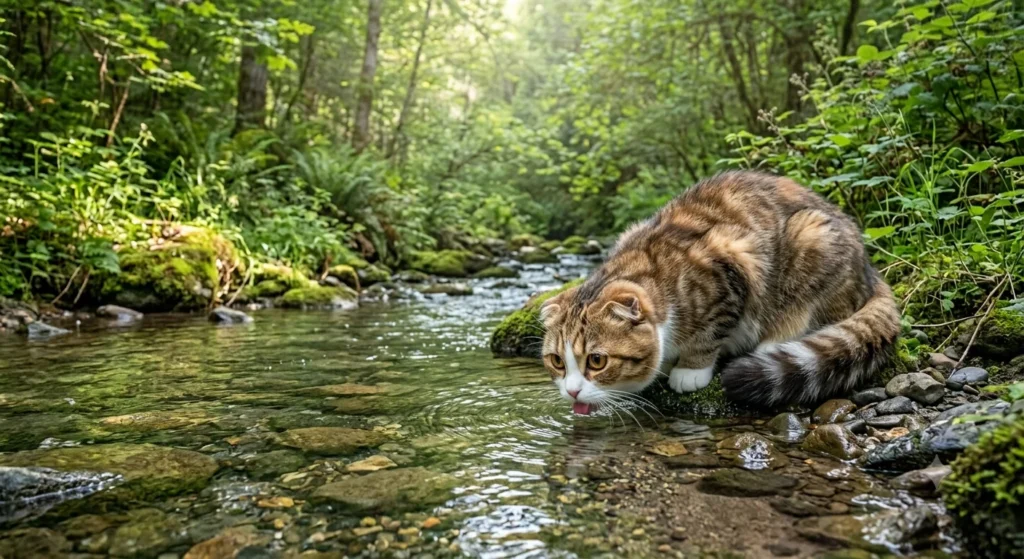
Long before cats became our companions, their ancestors survived by finding safe sources of water.
In the wild, stagnant water was more likely to contain bacteria, parasites, or decaying organic matter. Streams and flowing water were generally cleaner and safer to drink.Although your indoor cat no longer faces these dangers, those survival instincts haven’t disappeared.To your cat, moving water simply feels like the better choice.
2. Running Water Usually Tastes Fresher
Even if you replace your cat’s water every day, standing water gradually collects dust, fur, food particles, and odours from the surrounding environment.
Cats have an excellent sense of smell. Something you barely notice may be enough for your cat to lose interest. Moving water stays oxygenated and often tastes fresher, making it naturally more appealing.
3. Cats Are Drawn to Movement
Cats are born hunters.
They instinctively notice movement because, in nature, movement often meant prey.
A gentle stream of water catches their attention in much the same way. A completely still bowl, on the other hand, may simply blend into the background.
4. Still Water Can Be Difficult to See
Believe it or not, many cats struggle to judge the surface of still water. Because water is transparent, some cats find it difficult to see exactly where it begins. Moving water creates ripples and reflections, making it much easier to recognise.
5. Whisker Fatigue May Make Bowls Uncomfortable
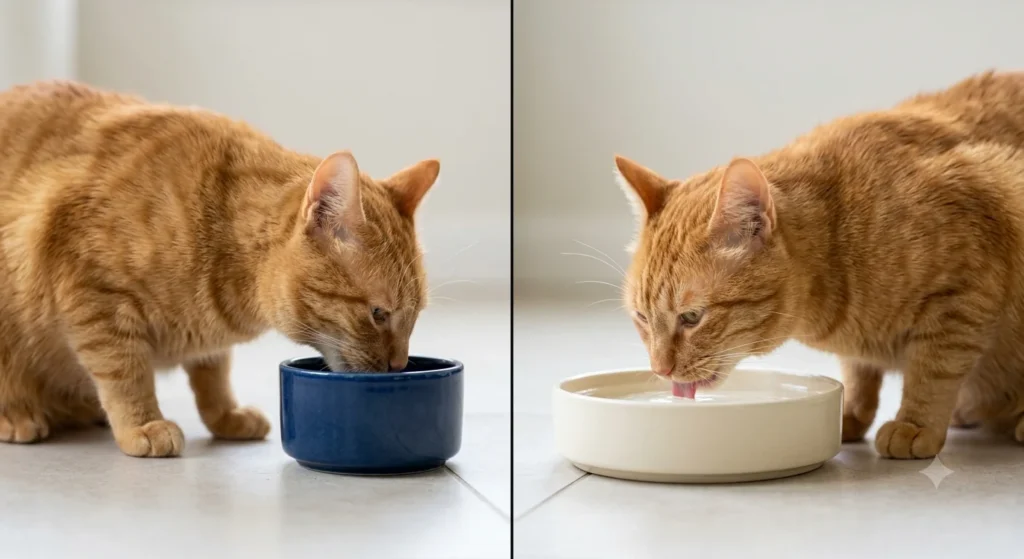
A cat’s whiskers are extremely sensitive.If a bowl is too deep or too narrow, the whiskers constantly brush against the sides while drinking.
Many experts believe this can make drinking uncomfortable—a phenomenon often referred to whisker fatigue.
Running water from a tap or a wide, shallow fountain eliminates this problem.
6. They're Naturally Curious
Cats investigate almost everything that moves.
A dripping tap is unpredictable, making it much more interesting than a motionless bowl.Sometimes, what starts as curiosity becomes a preferred drinking habit.
7. Flowing Water Encourages Better Hydration
Some cats simply drink more when water is moving.
This is particularly important because cats naturally have a low thirst drive and can be prone to dehydration, especially if they eat mostly dry food.
Anything that encourages your cat to drink more is generally a positive thing.
Signs Your Cat May Not Be Drinking Enough Water :
Even if your cat prefers running water, it’s important to make sure they’re drinking enough overall.
Watch for signs such as:
- Dry or sticky gums
- Lethargy
- Sunken eyes
- Loss of appetite
- Reduced skin elasticity
- Dark yellow urine
- Frequent constipation
If you notice these symptoms, contact your veterinarian promptly.
How to Encourage Your Cat to Drink More Water?
Fortunately, encouraging healthy drinking habits doesn’t have to be difficult. Here are a few practical tips:
Refresh the water daily
Fresh water is naturally more appealing than water that’s been sitting for hours.Use a ceramic or stainless-steel.These materials are less likely to retain odours than plastic bowls.
Place multiple water stations around your home.
Cats often drink more when water is easy to access.
Keep food and water separate
Many cats prefer drinking away from where they eat.Include wet food in their diet. Wet food provides additional moisture and can support healthy hydration.
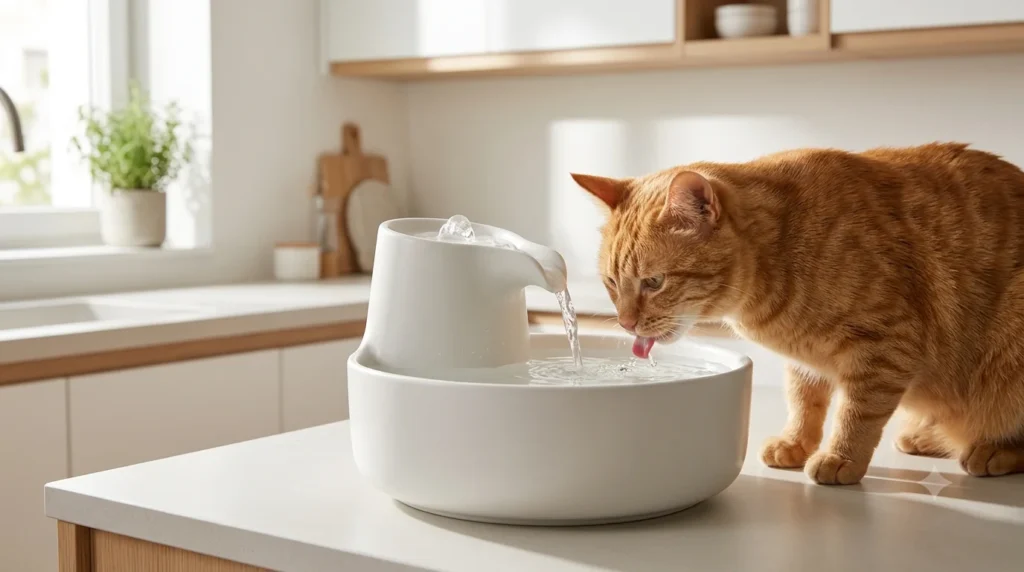
Consider a cat water fountain If your cat constantly chooses the tap over its bowl, a water fountain may be a worthwhile investment. The continuous circulation keeps the water moving and fresh, making it more attractive to many cats.
Should You Buy a Cat Water Fountain?
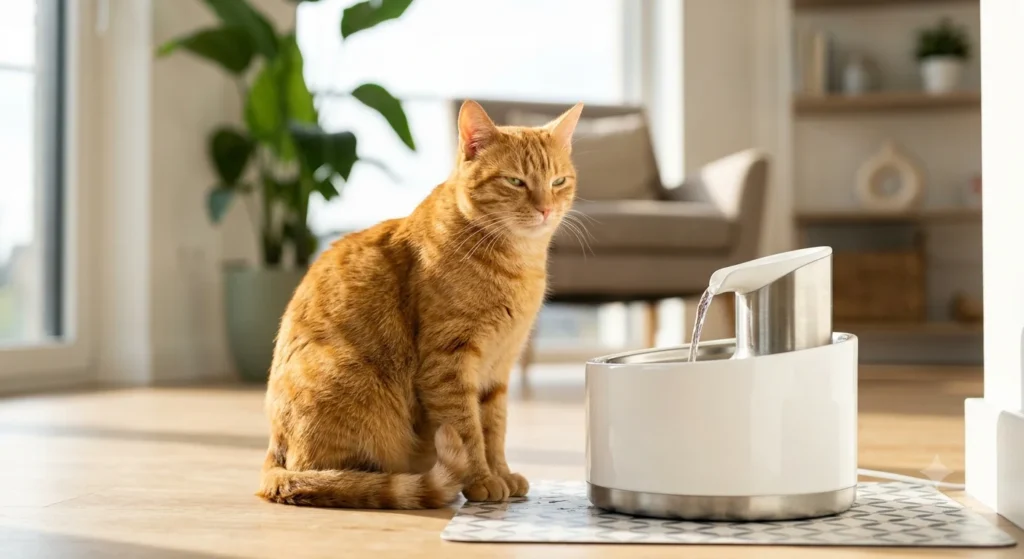
Not every cat needs one—but many benefit from it.A quality cat water fountain can:
- Encourage more frequent drinking
- Keep water circulating
- Improve freshness
- Filter out hair and debris
- Reduce the need to leave taps running
Common Mistakes Cat Owners Make
Sometimes, the issue isn’t the water—it’s how it’s presented.Avoid these common mistakes:
- Leaving water unchanged for several days.
- Using narrow plastic bowls.
- Placing the water bowl next to the litter box.
- Providing only one water source in a large home.
- Ignoring signs of dehydration.
Frequently Asked Questions
Why does my cat only drink from the tap?
Many cats are instinctively attracted to moving water because they associate it with freshness and safety.
Do all cats prefer running water?
No. Some cats are perfectly happy drinking from a bowl, while others strongly prefer moving water.
Is tap water safe to cats?
In most areas where tap water is safe for people to drink, it’s also safe for cats. If you’re unsure about your local water quality, filtered water may be a good option.
Can a cat water fountain help?
For many cats, yes. A fountain can encourage them to drink more by keeping water fresh, cool, and continuously moving.
Final Thoughts
Your cat isn’t being stubborn when it ignores a perfectly full water bowl. More often than not, it’s simply responding to instincts that have helped cats survive for thousands of years.
By understanding why cats prefer running water, you can make small adjustments that encourage healthier drinking habits. Whether means refreshing the water more often, choosing a better bowl, or trying a cat water fountain, the goal is simple: helping your cat stay happy, healthy, and well hydrated.